




Think about your last ten disability insurance conversations. How many were with clients sitting at a desk, and how many were with someone who spends their day on a ladder, under a truck, or on a job site? If your pipeline skews heavily toward white-collar occupations, it’s probably not because tradespeople don’t want coverage. It’s because the traditional DI process has made it hard to sell to them and most advisors have quietly stopped trying.
The occupation problem nobody talks about
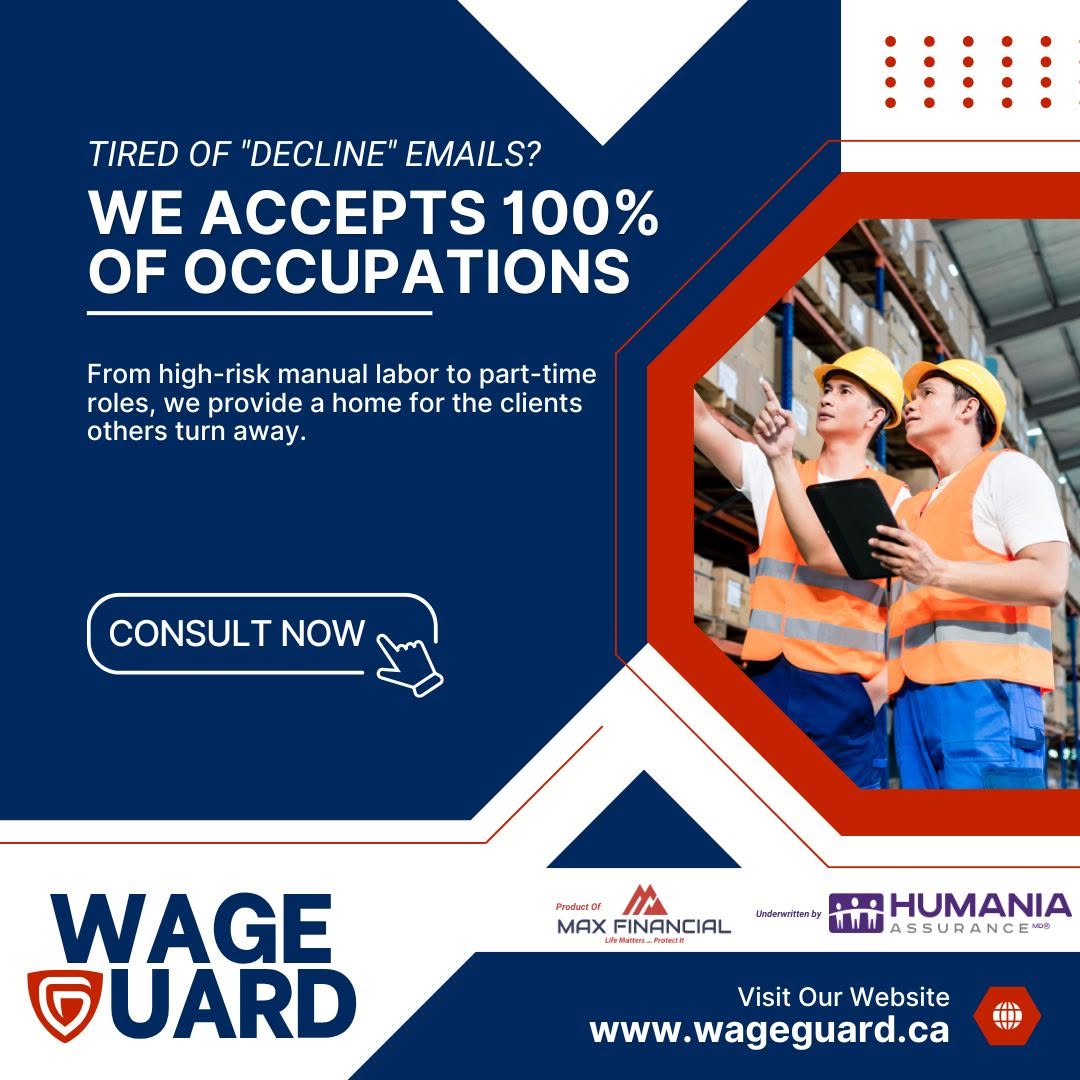
Traditional long-term disability underwriting leans heavily on occupation class. Desk-based professionals land in the favourable classes, with lower premiums and smoother approvals. Tradespeople and manual labourers get pushed into higher-risk classes, longer underwriting timelines, paramedical exams, and often outright decline or heavy rating on the policy.
For the advisor, that means more work for a worse outcome: longer applications, more back-and-forth with underwriting, and a client who walks away frustrated before the ink is dry. Over time, most advisors adjust their prospecting accordingly. They stop bringing up disability coverage with the roofer, the electrician, or the welder, not because the need isn’t real, but because the sales process punishes them for trying.
The data works against that instinct. Physically demanding occupations carry meaningfully higher rates of workplace injury than office-based roles, which means the clients least likely to get approved by a traditional carrier are often the clients most likely to actually need the coverage.
Where accident-only coverage changes the math
This is exactly the gap Wage Guard’s accident-only disability product is built to close. Because the coverage responds to income loss from an accident rather than a broad range of illness-based claims, the underwriting doesn’t need to lean on the same occupation-class complexity that slows traditional DI down. The application takes about 15 minutes, there’s no medical exam or fluid testing, and it comes down to a single health question rather than a stack of paramedical requirements.
For a client who has been turned away, rated up, or simply never asked, that’s a different conversation entirely. It’s not “let’s see if you qualify.” It’s “let’s get you protected today.”
The trades client isn’t a hard sell. They’re a client nobody made it easy to say yes to.
What this looks like in practice
Picture a self-employed electrician with a mortgage, two kids, and zero sick days built into his business model. A ladder fall or a hand injury doesn’t just cost him a few weeks of income it can stall every job on his calendar. He’s not thinking about critical illness riders or waiver-of-premium fine print. He’s thinking about the mortgage payment due in three weeks.
That’s the client accident-only DI was built for, and it’s why the built-in features matter as much as the approval speed:
- No coordination of benefits on coverage up to $2,500/month for the first 36 months, so a claim isn’t reduced by other benefits he may have. BULLET: A built-in death benefit equal to five times the monthly benefit, up to $10,000, plus a premium waiver while he’s disabled. BULLET: An optional 20-year refund rider, returning 50%, 75%, or up to 100% of paid premiums if he never claims a detail that resonates with clients who are skeptical of “paying for nothing.” BULLET: Renewals up to age 100, so the coverage doesn’t disappear right when a tradesperson is aging into higher-risk years on the job.
Starting the conversation
The hardest part of selling into this segment usually isn’t the product, it’s the opening. Tradespeople are used to being sold to and used to being told no, so a pitch that sounds like every other insurance conversation gets tuned out fast. The advisors who do well here lead with the occupational reality first and the product second: “You’re on a roof or in a crawlspace every day, and if something happens, your income stops the same day your tools do. Most disability policies are built for people who don’t have that risk. This one is built for people who do.”
That framing does two things. It acknowledges what the client already knows about their own risk instead of trying to convince them of it, and it positions the product as purpose-built rather than a workaround. From there, the 15-minute application does the rest of the persuading clients who expect a fight are often surprised by how little friction there actually is.
Reframing your prospecting list
If your CRM is full of contacts you’ve mentally filed under “hard to place,” it’s worth a second look. Roofers, HVAC techs, electricians, plumbers, landscapers, and independent contractors in physically demanding trades are not a niche they’re a significant, underserved slice of the Canadian workforce, and most of them have never had an advisor bring them a product that was actually built with their occupation in mind.
This is also a segment that tends to travel in networks. Tradespeople talk to other tradespeople, often on the same job sites, in the same supplier yards, and through the same trade associations. A handful of well-placed conversations with the right first clients can open referral chains that a cold desk-based prospecting list simply doesn’t offer.
The advisors who win this segment aren’t necessarily better closers. They’re the ones who stopped assuming the answer would be no before they asked the question.
The bottom line for your practice
The clients most exposed to income loss from an accident are often the same clients the traditional DI market has made the hardest to insure. That mismatch isn’t a dead end it’s a business opportunity sitting in plain sight, in trucks and job sites your competitors have already written off. Accident-only coverage with simplified, same-day underwriting turns a conversation you used to avoid into one of the easiest yeses in your book, and it gives you a genuine reason to reopen every “hard to place” file you’ve been sitting on.